AI Literacy for Lawyers: Why Understanding the Tech Is a Professional Duty

In Mata v. Avianca (2023), a New York lawyer submitted a court brief citing cases that a chatbot had invented, then defended those citations to a judge before the court sanctioned the lawyers involved. The story has since repeated itself in courtrooms across several countries. The tool was not the problem. The problem was using a tool nobody in the room understood well enough to check.
AI literacy for lawyers is the working knowledge needed to evaluate, prompt, and supervise these tools without breaching professional duties. It is not about becoming a programmer. It is about understanding what the technology does, where it fails, and when its output cannot be trusted, before you rely on it in front of a client or a court.
Key takeaways
- What it means: AI literacy is the practical ability to evaluate, prompt, and supervise legal AI tools responsibly. It requires no coding.
- The core risks: hallucinated citations, client-confidentiality breaches when data is pasted into a tool, and reliance on unverified output.
- The regulatory direction: competence duties (ABA Model Rule 1.1 Comment 8), Article 4 of the EU AI Act, and German continuing-education rules increasingly point the same way.
- How to build it: learn how models work, stress-test them on known answers, run vendor due diligence, and get hands-on training.
The real risk: unsupervised legal AI and hallucinations
There is a comfortable assumption that legal AI is just a smarter search box. You type a question, it returns an answer, you move on. The interface encourages exactly that reading. It is confident, fluent, and fast.
But a large language model does not work like a legal research database. Westlaw, LexisNexis, and in Germany juris and beck-online are deterministic: they retrieve records that actually exist. A language model is probabilistic. It predicts the most plausible-sounding continuation of your prompt, which is usually correct and occasionally, confidently, invented. That is why it can hallucinate a citation that reads perfectly but points to nothing.
A lawyer who understands that behaves differently from one who does not. They know that fluent output is not verified output. They know which tasks the tool is reliable for and which need a second set of eyes. They know that “the AI said so” is not a defence, because responsibility for the work never left their desk.
You cannot supervise what you cannot reason about. Every duty a lawyer already carries, competence, diligence, confidentiality, sits on top of the tools used to do the work. If you do not understand where a model gets its information, whether your client’s data leaves the building when you paste it in, or why the same prompt can give two different answers, you cannot meet those duties with confidence. Understanding the technology is a precondition for good lawyering, not an optional upgrade to it.
Why AI literacy is now part of a lawyer’s duty of competence
Competence has never been a fixed body of knowledge. It moves with practice. A lawyer who ignored email in 2005 or e-discovery in 2015 was not holding a principled line, they were falling behind on the tools their clients and courts already expected them to handle. AI is the current version of that shift, arriving faster than the last few.
Regulators and bar associations are starting to say this explicitly, and the specific baselines matter:
- United States: ABA Model Rule 1.1, Comment 8 states that maintaining competence requires keeping abreast of “the benefits and risks associated with relevant technology.” Several state bars have issued their own guidance on generative AI on top of that.
- European Union: Article 4 of the EU AI Act introduces an explicit obligation on organisations to ensure a sufficient level of AI literacy among the staff who deploy these systems.
- Germany: specialist lawyers (Fachanwälte) already carry a statutory continuing-education duty and must document a fixed number of training hours each year. As AI becomes part of how legal work is produced, spending some of those hours understanding it becomes hard to argue against.
The point is not that a single rule forces you to take an AI course this quarter. The point is that the direction of travel is unmistakable. Understanding your tools is drifting from a competitive advantage toward a baseline expectation, and the lawyers who wait for it to become mandatory will be learning under pressure rather than on their own terms.
How to build AI literacy: four practical steps
“Become AI literate” is easy to say and easy to file under someday. It helps to treat it as a ladder rather than a leap. You do not need to become a machine-learning engineer. You need enough working understanding to use these tools responsibly and to know when to stop trusting them.
- Learn how the tools actually work. Not the marketing, the mechanics: what a large language model is doing when it answers, why it hallucinates, what “training data” means for confidentiality, and why the wording of your request changes the output so much. Our glossary of essential legal AI terminology is one place to start.
- Stress-test prompts against known answers. Reading about AI and using it are different skills. Take a task you already know the right answer to, run it through a tool, and watch where it is strong and where it quietly goes wrong. Learning to write a precise prompt is part of the same muscle. Working with something you can already check is the safest way to build the instinct for when you cannot.
- Run due diligence on your vendors. Part of literacy is procurement. Where is the data hosted and processed? Is it used to train the model? What happens to a document after you upload it? Can you see why the system produced a given output? A lawyer who cannot ask these questions is not in a position to choose a tool, only to accept one.
- Get hands-on, structured training. Self-teaching takes you a long way, but a good workshop compresses months of trial and error into a focused session and lets you ask the awkward questions in real time. This is why we run AI workshops for legal teams: sessions built for lawyers, run by people who practise law and build the technology, focused on the practical reality of using AI rather than the hype around it.
How much of that actually requires opening a textbook? Maraja Fistanić and Pascal Di Prima put that exact question to each other: how much AI knowledge a lawyer genuinely needs to use these tools well, without touching a line of code. A working grasp of hallucinations, technical limits, and where the infrastructure lives turns out to be enough, and it’s what lets a team set realistic expectations instead of either fearing the tool or over-trusting it. Their conclusion: a chatbot is usually the right place for a firm to start, and the responsibility for the work never leaves the person using it.
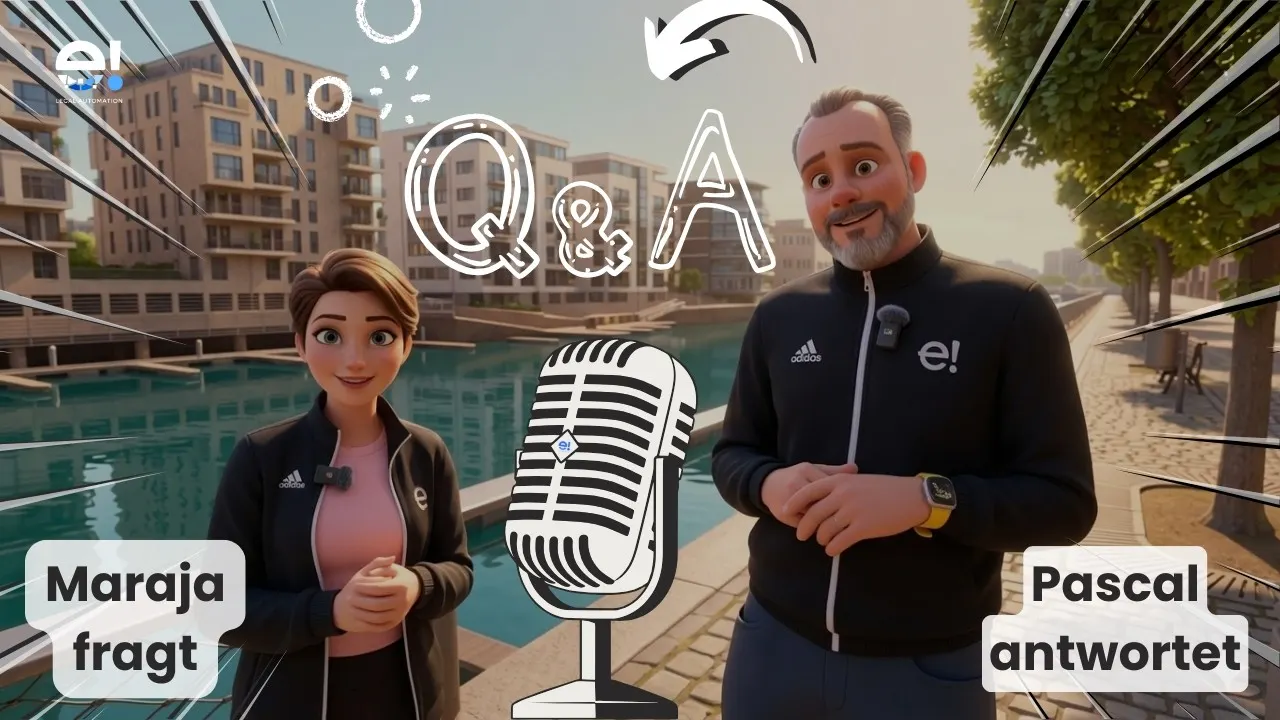
Watch: “Pascal Di Prima erklärt KI-Grundwissen für Anwälte in Legal Tech” (interview in German), Maraja Fistanić and Pascal Di Prima on how much AI knowledge lawyers actually need
None of these steps requires a technical background. They require the willingness to treat AI as something to understand rather than something to simply switch on.
From law students to partners: everyone has to level up
This is not only a problem for lawyers already in practice. It starts earlier. Many of the junior tasks law graduates once cut their teeth on, first-pass document review, routine research, standard drafting, are exactly the tasks now being handed to AI. A graduate who arrives able to recite doctrine but unable to work with, and critically assess, the tools their firm already runs is entering a market that has quietly moved. Law schools that treat technology as an elective are sending students into that market underprepared, and the students who close the gap themselves will have the edge.
At the other end of the profession, the stakes are different but the obligation is the same. Senior lawyers set the standard their teams work to. If a partner does not understand the tools their associates are using, they cannot review the work properly, cannot set sensible guardrails, and cannot model the judgement that keeps AI from becoming a liability. Delegating the technology to “the digital-native associates” is not a strategy. It is an abdication of exactly the supervision the role exists to provide.
The framing that helps is simple. Nobody is being asked to become a technologist. Everyone, from the student sitting exams to the partner signing off on advice, is being asked to understand the tools they now work alongside well enough to use them responsibly. That is not a burden the profession can opt out of. It is what staying competent looks like now.
It is not about who adopted AI first, or which tool everyone happens to be buying right now. The lawyers who invest in understanding AI will be the ones who can keep pace with whatever technology comes next.
FAQ
What does “AI literacy” mean for lawyers, and why does it matter?
AI literacy for lawyers is the working knowledge to evaluate, prompt, and supervise AI tools without breaching professional duties. It requires no coding. It matters because a lawyer cannot supervise what they cannot reason about: the duties of competence, diligence, and confidentiality all sit on top of the tools used to do the work.
What are the risks of using generative AI in law?
The main risks are hallucinated citations that look real but do not exist, confidentiality breaches when client data is pasted into a tool that may store or train on it, and reliance on fluent but unverified output. Mata v. Avianca (2023) showed how fabricated citations reach court.
How should lawyers verify AI-generated output?
Treat fluent output as unverified until checked. A large language model predicts plausible text, so every citation and factual claim must be confirmed against a real legal database such as Westlaw, LexisNexis, juris, or beck-online. Fluency is not verification, and “the AI said so” is not a defence.
What confidentiality and privilege issues arise?
Pasting client information into an AI tool can send it outside the firm’s control, where it may be stored or used to train the model. That puts confidentiality, and any privilege attaching to the information, at risk. This is why due diligence on where a vendor hosts and processes data matters.
What training should law firms provide?
Firms should provide hands-on, structured training rather than a one-off briefing. Effective training covers how large language models work and why they hallucinate, how to write precise prompts, how to verify output, and how to run vendor due diligence. A practical workshop compresses months of trial and error into one session.
Which legal tasks are suitable for AI, and which are not?
AI suits high-volume, repetitive tasks where the output can be checked, such as first-pass document review, routine research, and standard drafting. It is not suited to work a lawyer cannot verify, or where final legal judgment and responsibility rest with them. Fluent output can hide errors, so verification stays essential.
Ready to automate your legal workflows?
Discover how e! can transform your legal operations with no-code automation.