Why AI Agents Alone Can't Automate Legal Work
Why AI Agents Alone Can’t Automate Legal Work
Author: Hananeh, Lexemo
Category: Industry Analysis
Published: 14 April 2026
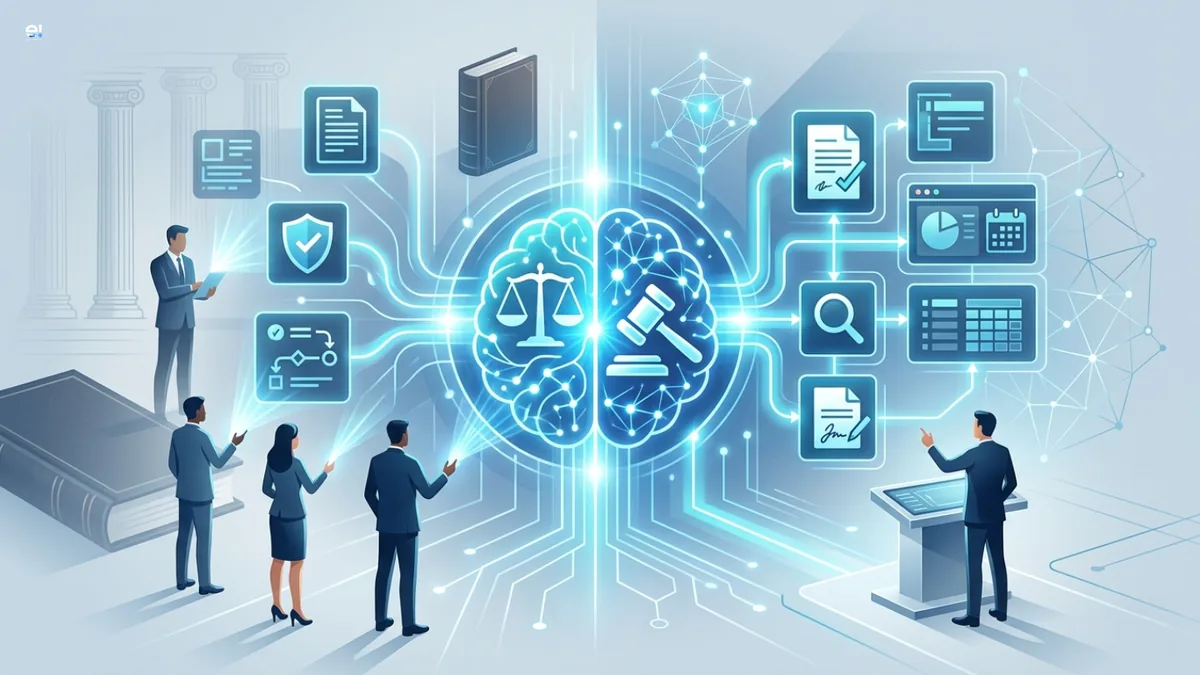
Artificial Intelligence is the hottest topic in legal departments today. AI agents promise a future where drafting emails, summarizing complex contracts, spotting risks, and providing instant recommendations happen in seconds.
In theory, legal work is becoming faster and smarter. In reality, most legal teams find themselves stuck in a paradox: they have more AI tools than ever, but their manual workload remains unchanged.
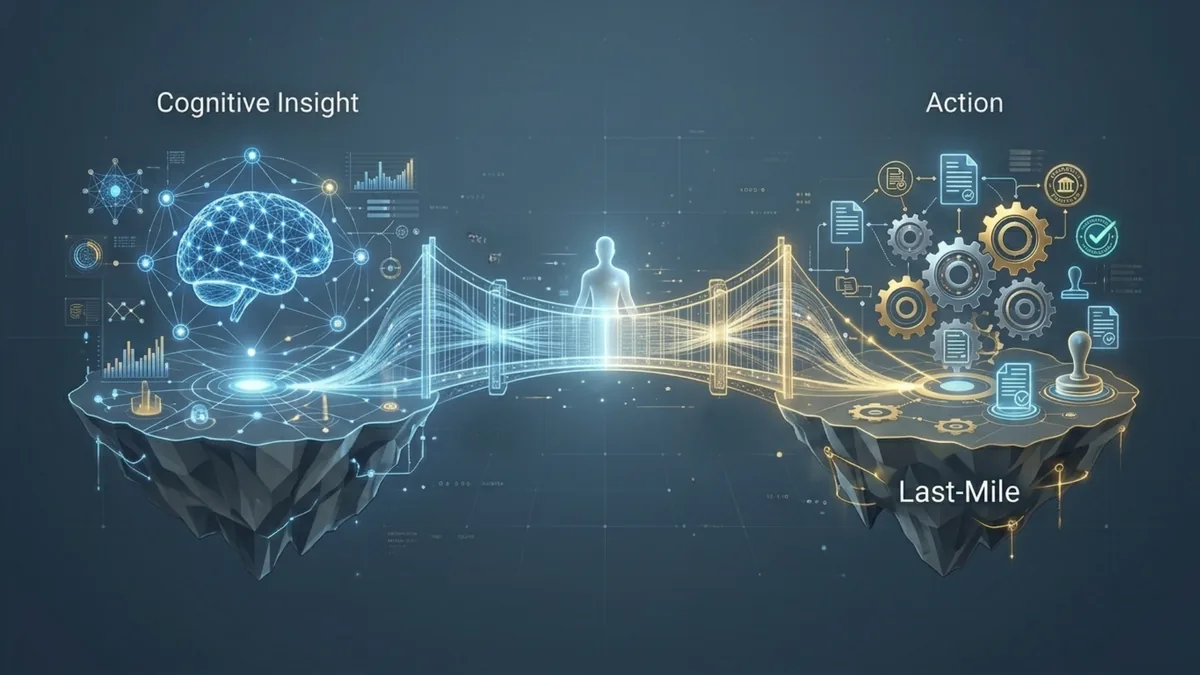
The reason? AI is excellent at identifying problems, but it often fails to solve them. Attorneys are still stuck manually editing documents, chasing approvals, and updating internal systems. While the cognitive burden might shift slightly, the operational grind stays the same. Most legal AI strategies fail because of this gap between insight and action.
Platforms like e! by Lexemo are closing this gap with “Pro Agent Tools.” These AI agents connect directly to APIs to move beyond analysis and actually execute tasks within defined workflows.
Solving the “Last-Mile Problem” in Legal AI
In logistics, the “last mile” is the final, most expensive, and most complex step of delivery often negating all previous efficiency gains. According to the Harvard Business Review, this same “last-mile problem” is currently the primary bottleneck for AI transformation in the corporate world.
According to the Harvard Business Review, this same “last-mile problem” is currently the primary bottleneck for AI transformation in the corporate world.
Legal AI faces an identical challenge. Most tools stop at providing insights: summarizing risks, flagging clauses, or suggesting next steps. However, a true legal workflow requires action:
- Retrieving data
- Triggering approval chains
- Revising documents
- Updating official registries
- Informing stakeholders
AI can handle roughly 80% of the cognitive heavy lifting. But that final 20% - where complexity, risk, and the margin for error are highest - is where the process often breaks down and reverts to manual human labor.
Why AI Agents Can Create New Bottlenecks
A common misconception is that smarter, more autonomous agents will eventually bridge this gap. The logic suggests that better “thinking” leads to better “doing.”
However, quality of thought is only half the battle. The real issue is system access. An AI agent can provide a perfect recommendation but remain useless if it cannot access the systems where the work actually happens. Without this capability, AI doesn’t eliminate work; it simply shifts it.
Currently, legal experts must still:
- Review and interpret every AI output before acting.
- Decide which results require a response.
- Manually execute actions across multiple, disconnected tools.
- Coordinate between teams and systems that don’t communicate.
The result is a paradox: more AI, but no less effort. In some cases, managing the output of AI actually increases the administrative burden.
The Wrong Debate: Agents vs. Workflows
The legal tech industry often frames automation as a choice: autonomous AI agents on one side versus structured, rule-based workflows on the other.
- Agents are flexible and intelligent, handling nuance better than rigid scripts.
- Workflows are deterministic and consistent, providing the logic and audit trails required for compliance.
Treating these as competing approaches is a mistake. Workflows offer consistency but fail with unstructured data. Agents offer adaptability but lack the guardrails for reliable cross-system execution. Together, they create a complete architecture where human control is maintained and flexibility fills the gaps.
Building Institutional Trust in Legal AI
In a regulated industry, performance isn’t enough; transparency and accountability are non-negotiable.
The Pro Agent Tools from e! by Lexemo are designed as “execution-capable” agents embedded within structured workflows. They operate within clear boundaries to:
- Access live data
- Trigger approvals
- Generate documents
- Execute end-to-end workflows
Every step is logged, time-stamped, and attributed, creating automatic audit trails while keeping human oversight at critical decision points.
From Insight to Action: AI in Practice
Currently, AI might flag a problem in a contract and suggest a fix. Then, a lawyer takes over: reviewing the output, editing the file, routing it for approval, updating the CRM, and notifying the client.
With e! by Lexemo, Pro Agents with API connectivity change this dynamic. After the initial analysis, the agent can:
- Retrieve relevant data and generate revised language.
- Automatically route documents for internal approval.
- Update systems and trigger notifications without manual intervention.
Human input is reserved for meaningful decisions, not administrative chores.
Why This Changes Legal Automation
Solving the last-mile problem creates a multiplier effect that goes far beyond individual time savings. Most delays and errors in legal workflows don’t come from the legal work itself - they come from coordination gaps between steps. Automated execution eliminates these gaps. An analysis by Bloomberg Law shows that in 2025, only 37% of lawyers report a measurable increase in automated processes through AI - a clear sign that pure analysis and research tools are not meeting expectations.
When workflows connect software and trigger notifications automatically, the fragmentation between legal teams, external firms, business stakeholders, and clients dissolves. Real-time transparency emerges as a natural byproduct of the process - not something someone has to manually create.
Critically, rather than granting open autonomy, e! by Lexemo focuses on controlled execution. Lawyers define exactly which tools an agent can access, which actions it can perform, and under what conditions. Decision paths remain explicit, data handling stays within regulated boundaries, and every step is traceable. Execution is automated; accountability is not abstracted.
The Future of Legal Automation
The original promise of AI was that it would replace “legal thinking.” In practice, human judgment remains the most reliable and necessary component of the process.
The future is more pragmatic: AI as an orchestration layer. This model, driven by e! by Lexemo, uses AI agents to navigate decision-tree workflows or act autonomously within a lawyer-defined framework.
AI agents will not replace workflows, and workflows will not replace agents. But together, they provide automation that actually finishes the job - making legal work faster, safer, and more transparent.
Ready to automate your legal workflows?
Discover how e! can transform your legal operations with no-code automation.